Concrete footers in Pittsburgh, PA
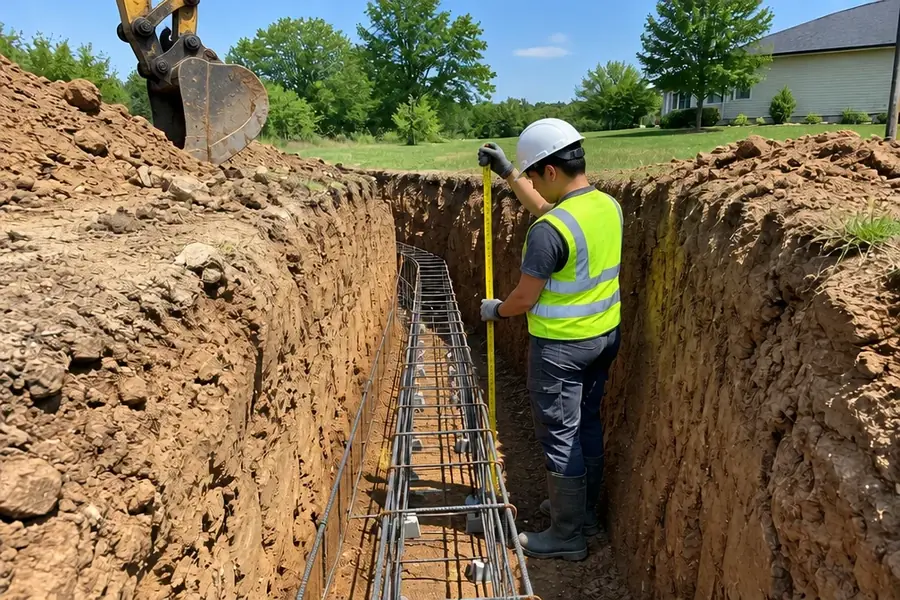
Every wall, porch and addition rests on its footer. Dig too shallow and frost lifts the whole thing. We trench down to firm soil below frost depth, set the steel and get it ready for your inspector before the concrete comes.
Job ticket: Concrete Footers
- Depth
- Below local frost line
- Typical size
- 16 to 24 in wide
- Steel
- Rebar in the trench
- Check
- Inspect before pour
Rough guide$30 to $60 per foot
Footers we pour
- Garage and pole building footers
- Footers for home additions
- Porch and sunroom footers
- Deck piers and sonotube footings
- Retaining wall footers
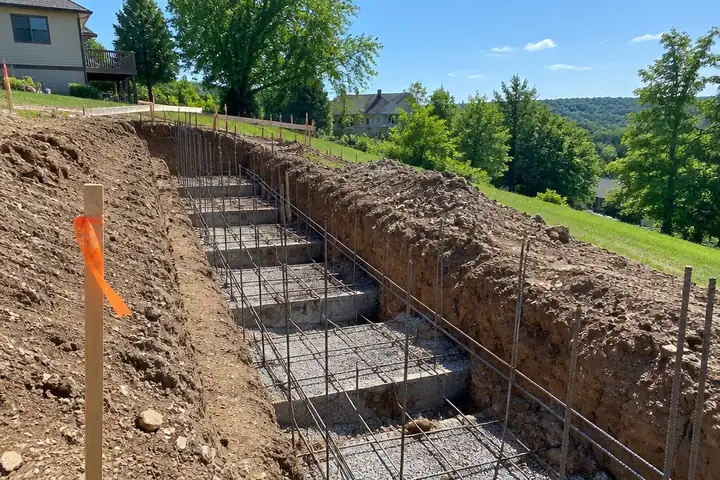
- Stepped footers on sloped sites
Size, steel and inspection
A common residential footer is about 16 to 24 inches wide and 8 to 12 inches thick, sized to the wall above and the soil below. Steel bars tie it together, and most jobs need an inspection before the pour. Plan your schedule around that, because concrete can't go in until the inspector signs off. Water in a trench has to be pumped out, too, since a footer shouldn't be poured into mud or standing water.
Deck and porch footings
A deck pier needs the same frost depth as a wall footer. A hole with a round form tube and a wide base keeps frost from gripping the sides and lifting it. Pittsburgh clay can jack up shallow posts within a few winters, which is why a porch or deck starts to lean. If you already have a sinking porch, it may need underpinning, not just new posts.
How the work goes
- Layout and permit
We mark the layout, confirm depth and have utilities located.
- Dig the trench
We trench to firm soil below frost depth, stepping on slopes.
- Steel and inspection
Rebar is set, then your inspector checks the trench.
- Pour and level
We pour to height and level the top, ready for block or forms.
Common questions
How deep should a footer be in PA?
Below the frost line, which is about 36 inches around Pittsburgh and can be more farther north. Your local code official sets the exact depth.
How deep do footers need to be in Pennsylvania?
It varies by municipality, but about 36 inches or more is typical in Western Pennsylvania. We confirm it for your township first.
How deep do footers need to be for a garage?
The same as for a house in most places, below the frost line, unless your code allows a floating slab for a small detached garage.
How deep do footers need to be for a deck?
Below the frost line as well, so about 36 inches around Pittsburgh. Freestanding low decks may have other rules, so check locally.
How much does it cost to pour footers?
Usually $30 to $60 per linear foot around Pittsburgh for digging, forming, steel and concrete. Rock or tight access costs more.
How wide should a footer be?
Under the 2021 residential code Pennsylvania uses in 2026, concrete footings for a light-framed house must be at least 12 inches wide and 6 inches thick, and wider on weak soil or under a larger house with a basement. Your plans or an engineer may call for more, so confirm current rules with your municipality.
Do you need rebar in concrete footings?
It is usually required or strongly recommended. Rebar ties the footer together across weak spots in the ground.
Do you need gravel under concrete footing?
Usually not. Footers typically sit directly on firm, undisturbed soil. Some designs add stone on wet sites.
More concrete services
- concrete slabs in Pittsburgh
- concrete garage floors
- concrete basement floors
- concrete flatwork
- exposed aggregate concrete
- shed slabs and hot tub pads
- concrete leveling in Pittsburgh
- concrete resurfacing in Pittsburgh
- concrete sealing
- epoxy garage floors
- concrete removal