Concrete slab estimator
Enter the size of your slab, and this concrete slab estimator shows how much concrete it takes, how many bags that would be and a rough installed price for the Pittsburgh area. Below it, we explain the math and what it can and cannot see.
| Slab, feet | Area | Yards at 4 inches | 80 lb bags | Rough installed price |
|---|---|---|---|---|
| 10 x 10 | 100 sq ft | 1.3 | 60 | $900 to $1,400 |
| 10 x 12 | 120 sq ft | 1.6 | 72 | $1,100 to $1,700 |
| 12 x 12 | 144 sq ft | 1.9 | 86 | $1,300 to $2,000 |
| 12 x 16 | 192 sq ft | 2.5 | 115 | $1,550 to $2,500 |
| 20 x 20 | 400 sq ft | 5.3 | 238 | $2,800 to $4,800 |
| 24 x 24 | 576 sq ft | 7.6 | 343 | $4,050 to $6,900 |
| 30 x 40 | 1,200 sq ft | 15.9 | 714 | $8,400 to $14,400 |
How to use the estimator
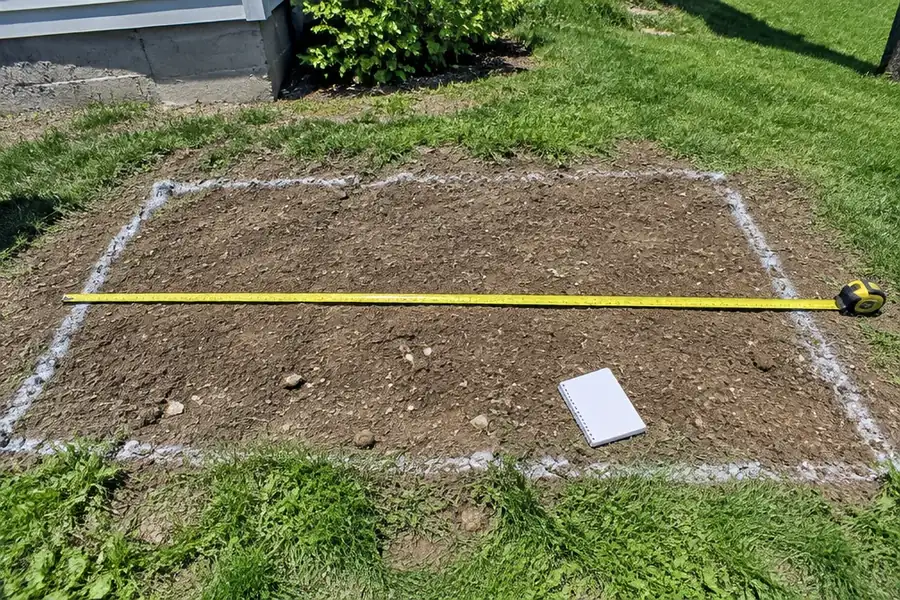
Measure the longest length and width of the slab in feet. If it is an L shape, split it into two rectangles, run each one and add the results. Pick a thickness, and say whether an old slab has to come out first. The estimator then gives you the area, the concrete you need, the same amount in 80 lb bags and a rough price for a crew to install it.
The sizes in the table above are common ones around Pittsburgh, all at 4 inches with no removal. A 10 x 12 is a typical shed pad, and a 24 x 24 is a typical two-car garage. They use the same math as the estimator, so you can check your own numbers against them.
The math behind the estimate
Calculating concrete slab cost starts with the amount of concrete, and that is simple once everything is in feet. Multiply length by width to get the square footage. Multiply that by the thickness in feet, which is the inches divided by 12. That gives you cubic feet, and dividing by 27 turns cubic feet into cubic yards, which is how concrete is sold.
Take a 20 x 20 slab at 4 inches. That is 400 square feet, times 0.33 feet, which is about 133 cubic feet. Divide by 27 and you get 4.9 yards. The estimator adds 7 percent, which brings it to 5.3 yards. That extra covers uneven ground, forms that bow a little and what stays in the truck. Running short during a pour is far worse than having a little left, as the second truck can leave a visible joint in the slab.
Which thickness to pick
Thickness changes the amount of concrete more than people expect. Going from 4 inches to 6 inches adds half again as much concrete, and it raises the price too. A thicker slab isn't always better, though, as good base work matters more on most jobs.
- 4 inches. Sheds, patios, walks and most garage floors.
- 5 inches. Garages with heavier trucks, and hot tub pads on some sites.
- 6 inches. Heavy vehicles, equipment and shop floors.
Bags or a truck?
An 80 lb bag makes about 0.6 cubic feet of concrete, so one yard takes about 45 bags. That means a small 3 x 3 pad is a fair job for bags and a mixer, but a yard or more is hard work. A 12 x 12 slab would take around 86 bags, or more than 3,400 pounds to lift, mix and place, and it all has to go down before the first batch starts to set.
For anything over about a yard, a ready-mix truck usually makes more sense. Suppliers often charge a short load fee on small orders, so the price per yard goes up on small pours. Our concrete slab cost guide explains how that works.
What the price range includes
The price is for a slab installed by a crew, not just the concrete. It starts from the same $7 to $12 per square foot that we use for slabs across Pittsburgh, which covers the stone base, reinforcement, forms, the pour and a broom finish. Small slabs get a higher rate per foot, as a crew and a truck cost about the same for a small job as a larger one. Thicker slabs add to the rate, and removing an old slab adds about $3 to $7 per square foot.
If you are only buying concrete to pour yourself, the rough price won't apply. The yards and bags will still be right, and you can get a price by the yard from a local supplier.
What the estimator cannot see
No estimator can see your yard, and on Pittsburgh lots, that is where the price moves most. These are the things that will change your number after a site visit.
- Slope. A hillside lot may need digging, more stone or a thicker edge.
- Access. If the truck cannot reach, a pump or buggies usually add $400 to $1,000.
- Soft ground. Fill and clay have to be dug out and replaced with stone.
- Thick old slabs. Old concrete with heavy steel takes longer to break out.
- Steel. Rebar costs more than mesh, and some jobs need it.
- Finish. Exposed aggregate and smooth steel trowel finishes cost more than broom.
- Season. Cold weather means blankets, heat and additives.
From an estimate to a firm price
Use this number to set your budget and to check whether a quote looks sensible. A firm price needs someone to look at the site, as the things above can move the total by a lot. When you ask for quotes, give each company the same size, thickness, base and steel, so that you are comparing the same job.
If you would like us to look at it, send us your size from the estimator through our free quote form. A photo of the area and the way a truck would get in helps. For a closer look at thickness, strength and reinforcement, read our thickness, PSI and rebar guide.
Common measuring mistakes
- Measuring the old slab and forgetting that the new one will be larger
- Leaving out the thicker edges on a garage or shed slab
- Rounding down instead of up when ordering
- Using inches for the thickness in the math without dividing by 12
- Forgetting steps, aprons or small pads that are poured the same day
- Assuming the ground is level across the whole slab
| Work | Typical price | Good to know |
|---|---|---|
| Concrete slab, poured and finished | $7 to $12 per sq ft | Stone base, reinforcement and broom finish included |
| Garage floor replacement | $9 to $15 per sq ft | Includes breaking out and hauling the old floor |
| Basement floor | $8 to $14 per sq ft | Higher when concrete has to be carried or pumped in |
| Shed or hot tub slab | $1,200 to $3,000 | Most pads from 8x8 to 12x16 |
| Exposed aggregate concrete | $11 to $18 per sq ft | Depends on stone choice and shape |
| Concrete leveling | $4 to $12 per sq ft | Slab jacking at the low end, polyurethane foam at the high end |
| Concrete resurfacing | $4 to $10 per sq ft | Only for slabs that are sound and level |
| Concrete sealing | $1.50 to $3 per sq ft | Cleaning, crack filling and one coat of sealer |
| Epoxy garage floor | $5 to $9 per sq ft | Grinding, repairs, base coat, flake and top coat |
| Concrete footers | $30 to $60 per foot | Digging, forms, reinforcement and pour |
| Concrete removal | $3 to $7 per sq ft | Thicker slabs and hand carrying cost more |
Common questions
How much is concrete by the yard?
About $170 to $220 per yard delivered around Pittsburgh, before any short load fee.
How much is concrete per yard?
Ready-mix usually runs $170 to $220 per yard here, and small loads cost more per yard.
How many bags of concrete in a yard?
About 45 bags at 80 lb each, or about 60 bags at 60 lb each.
How many bags of concrete do I need?
Work out the yards, then multiply by 45 for 80 lb bags. The estimator above does it for you.
How to calculate yards of concrete?
Multiply length, width and thickness in feet, then divide by 27.
How to calculate yards of concrete from square feet?
Multiply square feet by the thickness in feet, then divide by 27. At 4 inches, that is about 1 yard per 81 square feet.
How much does a yard of concrete cover?
About 81 square feet at 4 inches thick, or about 54 square feet at 6 inches.
How much does a yard of concrete weigh?
About 4,000 pounds, which is one reason bags get hard to manage on larger slabs.
How many yards of concrete for a 20x20 slab?
About 5 yards at 4 inches, or just over 5 with a little extra for waste.
How to calculate concrete volume for slab?
Length times width times thickness, all in feet, gives you cubic feet.
More concrete services
- concrete slabs in Pittsburgh
- concrete garage floors
- concrete basement floors
- concrete flatwork
- exposed aggregate concrete
- concrete footers
- shed slabs and hot tub pads
- concrete leveling in Pittsburgh
- concrete resurfacing in Pittsburgh
- concrete sealing
- epoxy garage floors
- concrete removal