How long does concrete take to cure?
How long does concrete take to dry? New concrete is firm enough to walk on in about a day, ready for cars in about a week and at full design strength in 28 days. Concrete doesn't really dry out. It hardens by a chemical reaction with water, so the first week of care matters more than most people realize.
Updated
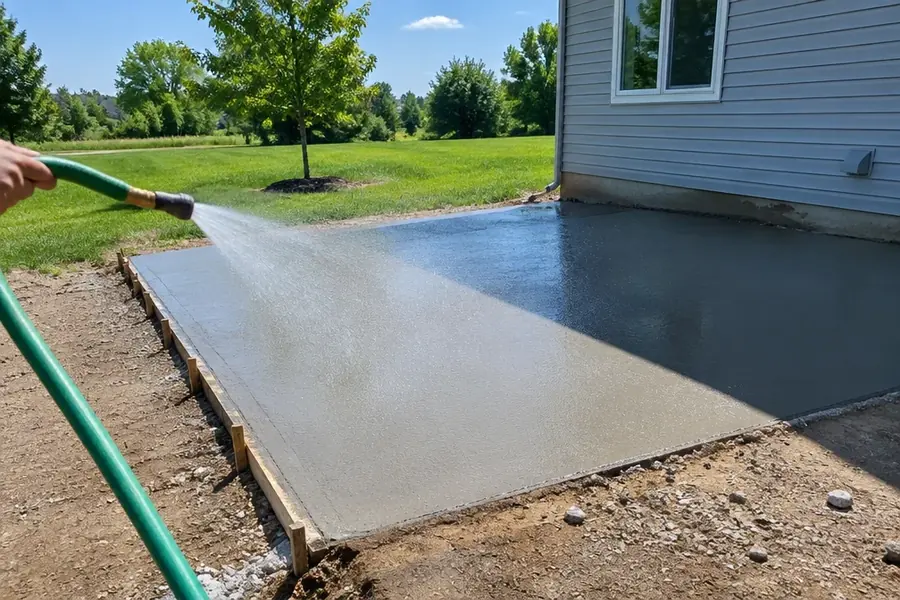
- 4 to 8 hoursSafe from light rain
- 24 to 48 hoursWalk on it
- 7 daysPark and drive cars
- 28 daysTrucks, sealer and coatings
Drying and curing are different
When concrete hardens, cement reacts with water to form crystals that bind the sand and stone together. That reaction is curing, and it needs water to continue. So concrete that dries out too fast stays weaker, especially at the surface. Drying is simply water leaving the slab, and it takes much longer, often a month or more per inch at the end stages. Flooring installers care about drying. Everyone else mostly cares about curing.
How to cure new concrete
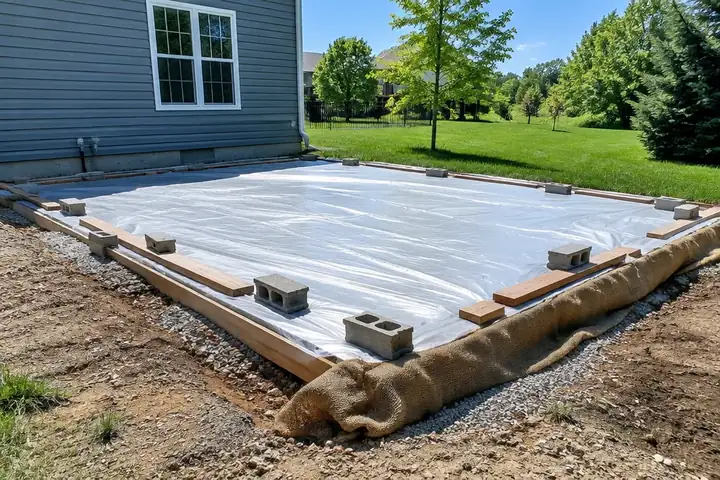
The goal is to keep the slab damp and at a moderate temperature for about a week. These are the common ways to do that. We usually apply a curing compound, and on hot days we may also add water or covers.
- Spray on a curing compound right after finishing
- Keep the slab damp with a light mist, morning and evening
- Cover it with plastic sheeting or wet burlap
- Use insulated blankets in cold weather
- Keep the slab shaded and out of wind on very hot days
Can you pour concrete in the rain?
Light rain after the surface has been finished usually does little harm. Heavy rain during placing or finishing is a problem, because extra water on the surface weakens it. If rain is coming, we cover the slab, delay finishing or reschedule. Never trowel rainwater into a slab. If rain marks the surface, the top can often be repaired or resurfaced afterward, but it is better to prevent it.
| Rain arrives | What to expect |
|---|---|
| During pouring | Stop or cover. Too much water weakens the top. |
| Before finishing | Wait and remove surface water before troweling. |
| 2 to 4 hours after finishing | Light marks possible, so cover it if you can. |
| After 4 to 8 hours | Usually fine. |
| After a day | Helpful, as it keeps the slab damp. |
Can you pour concrete in cold weather?
Yes, with precautions. Concrete needs to stay above about 50 degrees for its first couple of days. If it freezes before reaching about 500 PSI, it can lose much of its strength for good. For cold-weather pours, we use warm mix water, faster-setting mixes, insulated blankets and sometimes heaters. The ground also has to be thawed, since you can't pour on frozen soil.
Pittsburgh's main pouring season is about April through October, though you can pour through the winter with the right steps, at a higher cost. Fall pours benefit from extra care, because a new slab should have time to dry before its first salt and freeze. Don't salt new concrete during its first winter.
| Air temperature | What we do |
|---|---|
| Over 90 degrees | Pour early, keep it damp, use a retarder |
| 50 to 85 degrees | Ideal |
| 40 to 50 degrees | Warm water, faster mix, cover it |
| Under 40 degrees | Blankets, heat and thawed ground |
Hot weather pours
July and August bring a different problem. Heat and wind can dry the top of a slab too fast, causing shallow cracks, and make it harder to finish. We start early, dampen the base, have more people on site and apply curing compound straight after finishing. At home, the best thing you can do is keep the slab damp for the first few days, if we ask you to.
Why does concrete crack after pouring?
Concrete shrinks as it hardens, so tension builds up in the slab. Control joints give it a planned place to crack. Random cracks usually come from joints that are too far apart or cut too late, too much water in the mix, a poor base or a slab that dried too quickly. Hairline cracks are normal and don't usually affect strength. Cracks that are wide or uneven deserve a second look.
Care for the first year
- Keep vehicles off for about 7 days, and heavy trucks off for about 28.
- Don't drag anything sharp or park on one spot with jacks.
- Use no rock salt during the first winter.
- Rinse off road salt that cars drip in the winter.
- Seal the concrete after about 28 days. See concrete sealing.
- Keep downspouts draining away from the edges.
How long does concrete last?
A well-built residential slab can last 30 to 50 years or longer. Concrete keeps gaining some strength for years. What ends its life is usually water, salt and movement in the ground. That is why the base, the joints and sealing matter more than extra thickness. If yours is failing early, see concrete leveling or resurfacing.
When can the forms come off?
Slab edge forms usually come off after a day or two. Remove them carefully, since fresh edges chip easily. Wall and step forms may stay longer, depending on the load. Backfill against a new edge only once it has had a few days to gain strength. Heavy equipment needs to stay well back from fresh walls and edges for longer.
When can you seal, paint or put flooring on it?
These are general guides, and cold weather stretches all of them. The sealer or flooring maker's instructions come first.
| Next step | Wait about |
|---|---|
| Penetrating sealer | 28 days |
| Epoxy or floor coating | 28 days, plus a moisture test |
| Glued flooring | A month or more, after a moisture test |
| Framing walls on a slab | 2 to 7 days, gently |
| Backfilling against it | 3 to 7 days |
Common questions
How long does it take concrete to dry?
It feels dry on top within a day or two, but it keeps gaining strength for weeks.
How long does it take concrete to cure?
About 28 days to reach full design strength, and you can usually walk on it after a day or two.
How long does concrete take to dry?
It is hard enough to walk on in 24 to 48 hours and reaches full design strength in about 28 days. Thick slabs can stay damp much longer.
How long does concrete take to cure?
Concrete gains most of its strength in about 7 days and reaches its design strength in about 28 days.
How long does concrete take to cure completely?
Design strength comes at 28 days. It can keep hardening slowly for years.
How long does concrete take to dry before rain?
Ideally 4 to 8 hours after finishing. Cover it if rain comes sooner.
How long before you can walk on concrete?
About 24 to 48 hours for normal foot traffic. Stay careful with shoes for the first few days.
How long before you can drive on new concrete?
About 7 days for cars, and about 28 days for heavy trucks or RVs.
How long before you can park on new concrete?
About 7 days for most cars, and longer in cool weather, since concrete cures more slowly.
Can you pour concrete in cold weather?
Yes, with warm mix, faster-setting concrete, blankets and thawed ground. It must not freeze early on.
What temperature can you pour concrete?
Ideally between 50 and 85 degrees. It can go lower or higher with precautions.
What happens if you pour concrete in the rain?
Heavy rain can weaken and pit the surface. Light rain after finishing usually does no harm.
What happens if you pour concrete in cold weather?
It sets slowly and, if it freezes early, can lose strength for good. Protection solves most of this.
Why does concrete crack when curing?
It shrinks as it hardens. Joints direct that movement, and fast drying makes it worse.
More concrete services
- concrete slabs in Pittsburgh
- concrete garage floors
- concrete basement floors
- concrete flatwork
- exposed aggregate concrete
- concrete footers
- shed slabs and hot tub pads
- concrete leveling in Pittsburgh
- concrete resurfacing in Pittsburgh
- concrete sealing
- epoxy garage floors
- concrete removal